Libra turns a plain-language prompt into a live, editable VFX system inside Unreal Engine, not a picture of an effect, but the actual Niagara system, materials, and textures, generated and validated end to end. Every generated asset is independently read back and verified against what was asked for, so what lands in your project is something you can trust, inspect, and keep editing, not a black box. Built for technical artists and studios who are tired of rebuilding the same emitter and material setups by hand. Unreal first, with other engines on the roadmap.
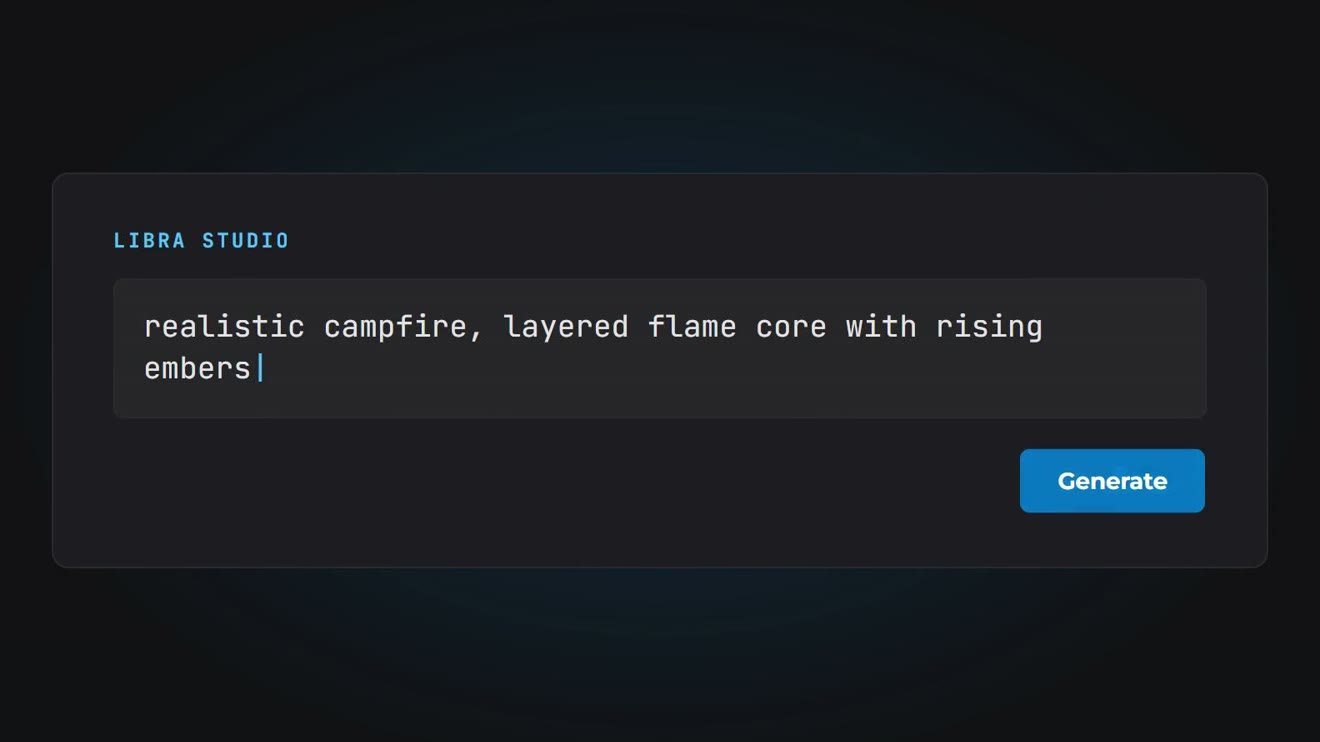
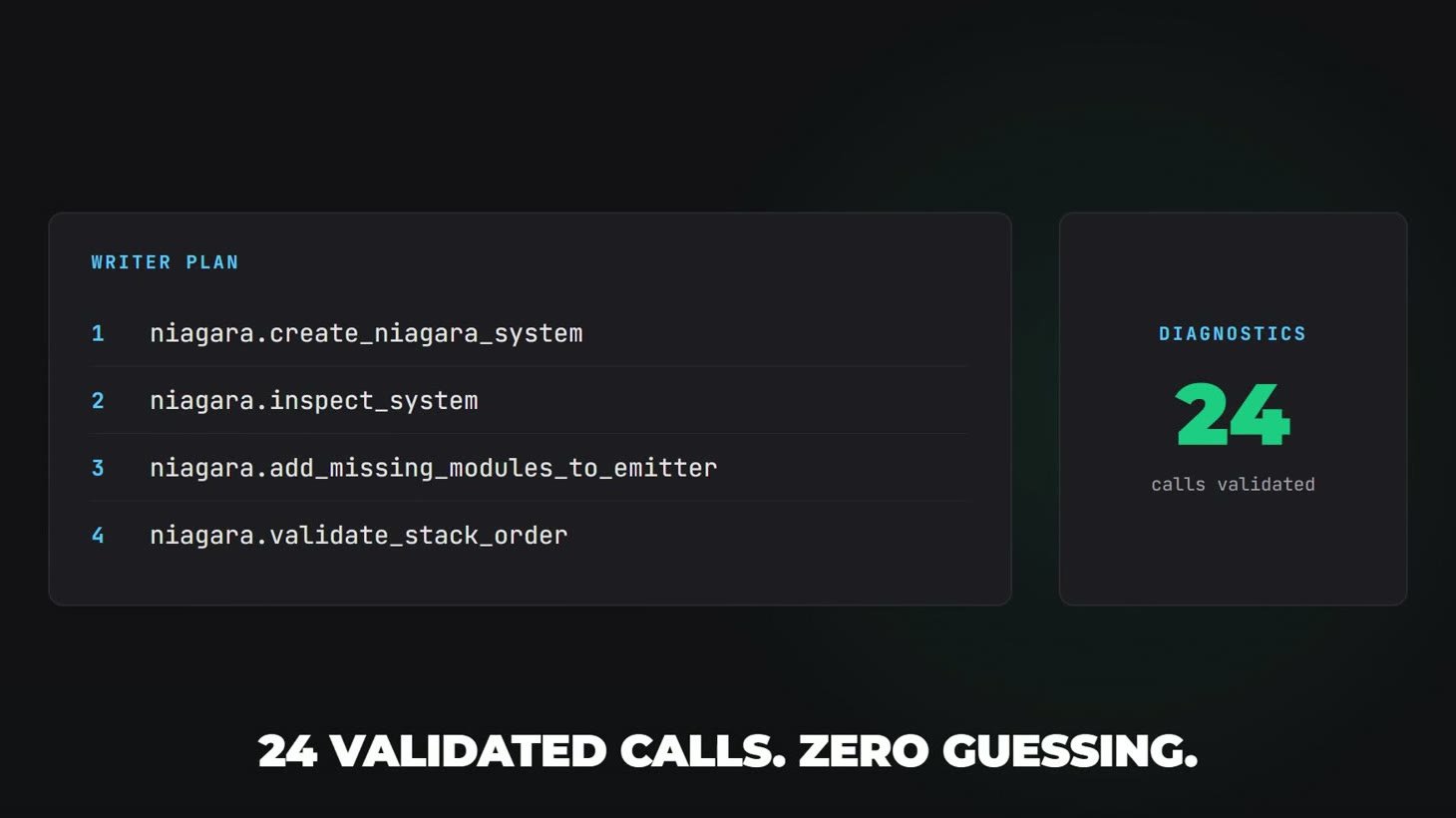
You tell Libra what you want, something like a swirling green summoning circle or a blue hex shield that grows out of a spark. Libra doesn’t just run with it. It first turns your sentence into a clear, structured recipe, then works that into a step-by-step build plan. A safety check sits in the middle, and if any part of the plan can’t be built reliably, Libra stops right there instead of guessing. Only once it passes does Libra create the real Niagara systems, materials and textures inside Unreal Engine. What you end up with isn’t a screenshot or a one-off render. It’s an actual asset in your content browser that you can open, tweak and keep working on like anything you made by hand.
A lot of AI tools call it a success if nothing crashed. That’s not good enough for us. After Libra builds an effect, it reads everything back out of the engine and compares it with what you asked for, right down to individual renderer properties and module values. An effect only counts as correct when the evidence says so. Behind that sits an automated test suite that keeps growing, and support that has been proven live across several Unreal Engine versions. If an effect only mostly works, you can’t build a production pipeline on it.
Every effect Libra generates or imports goes into a local library of presets, materials and effect patterns. The more you use it, the better it gets at understanding what you mean, with no need to retrain a model from scratch. Unreal Engine comes first, but the recipe format was designed to work beyond it, so Houdini, Blender and Unity are all on the table as Libra grows. The goal isn’t to be a novelty generator. It’s to be the kind of infrastructure that gives technical artists and studios back the hours they lose to repetitive VFX setup.